
How to Build a Balanced Lunchbox for Kids
When the morning rush hits, packing a school lunch can feel like a daily exercise in compromise. Balancing what your child will actually eat with what nourishes their growing body and mind isn't always easy. But learning how to build a balanced lunchbox for kids doesn't require culinary mastery or hours of prep work.
A well-planned lunch provides steady energy for afternoon classes, supports cognitive focus, and establishes healthy eating habits that last a lifetime. By framing lunch around simple, flexible food groups rather than strict rules, you can create stress-free meals your child looks forward to opening every day.
Lern how Nutrition & Co can help break down the essential components of a balanced kid's lunchbox, smart assembly strategies, and practical ways to make meal prep painless.
The 4-Component Formula for a Balanced Kid's Lunch
To keep things simple, think of a balanced lunchbox as a puzzle made of four basic building blocks. Combining these elements ensures your child gets a steady release of energy without a mid-afternoon crash.
Component | Why It Matters | Kid-Friendly Examples |
Lean Protein | Supports muscle growth, brain function, and long-lasting satiety | Hard-boiled eggs, turkey slices, hummus, roasted chickpeas, Greek yoghurt, edamame |
Complex Carbs | Provides sustained energy for physical activity and focus | Whole-wheat pita, quinoa, oat-based muffins, brown rice cakes, whole-grain wrap |
Colorful Fruit and Vegetables | Supplies essential vitamins, minerals, and dietary fibre | Cucumber rounds, cherry tomatoes, berries, apple slices, bell pepper strips |
Aids vitamin absorption and supports brain health | Sunflower seed butter, avocado slices, cheese cubes, olive oil dip, pumpkin seeds |
Step-by-Step: How to Build a Balanced Lunchbox for Kids
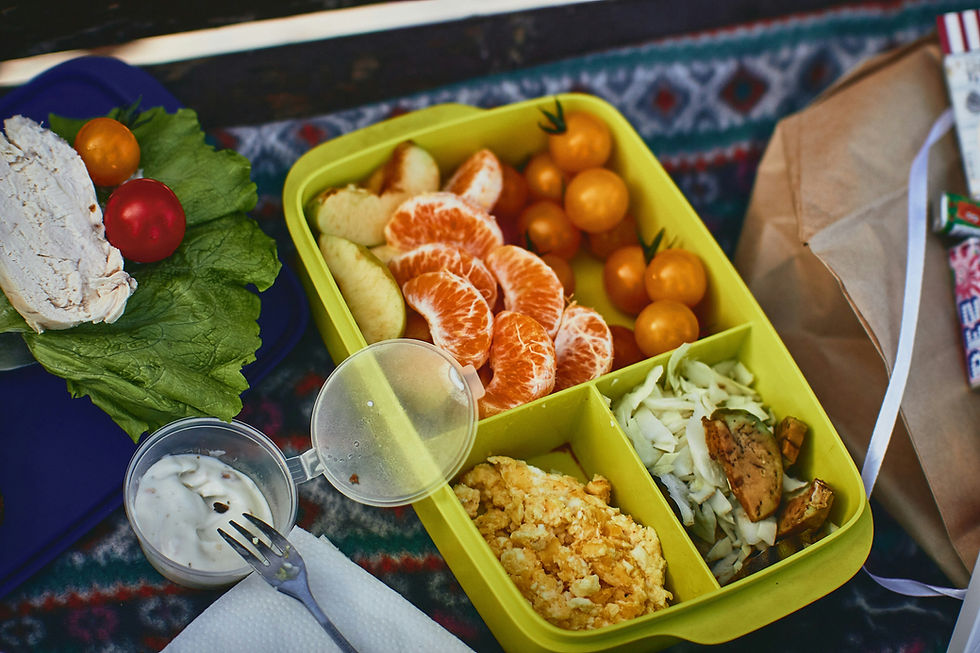
Building a great lunchbox comes down to structure and variety. Using a segmented bento-style container helps keep portions manageable and prevents different foods from touching, a win for selective eaters!

Start with a main carbohydrate and protein source:
Combine a lean protein with a complex carbohydrate. This could be a turkey and cheddar wrap on whole wheat, a thermos of warm lentil soup, or a deconstructed platter with hummus, whole-grain crackers, and cheese cubes.

Add Fresh Fruits and Vegetables:
Aim to include at least one vegetable and one fruit. Bite-sized pieces are easiest for smaller hands to manage during quick school lunch periods.
Tuck In a Healthy Fat or Dip:

Support fullness and brain power.
Add a small container of guacamole, ranch made with Greek yoghurt, or a sprinkle of seeds to make raw veggies more palatable and increase satiety.
Pair with Water or Milk:
Keep hydration front and centre.

Skip sugary juices and soda. Pack a reusable water bottle or a small carton of plain milk to keep your child hydrated without extra added sugars.
3 Stress-Free Lunchbox Prep Tips for Busy Parents
Making balanced lunches sustainable for your family routine requires a strategy that works on busy weeknights or mornings.
1. Involve Your Kids in the Process
Children are far more likely to eat foods they helped choose or prepare. Give them structured choices: "Would you like sugar snap peas or baby carrots today?" or "Do you want strawberries or blueberries?" Older kids can assemble their own bento boxes using pre-cut ingredients.
2. Batch-Prep Over the Weekend
Wash and chop hardy vegetables (like carrots, bell peppers, and cucumbers) on Sunday. Portion out snacks like air-popped popcorn, trail mix, or whole-grain pretzels into small containers so you can grab and pack them in seconds.
3. Embrace Leftovers
Don't reinvent the wheel every morning. Dinner leftovers, such as whole-wheat pasta with meatballs, grilled chicken strips, or mild bean chill, make excellent main courses when stored in an insulated thermal jar.
Frequently Asked Questions (FAQ)
Focus on seed-based alternatives like sunflower seed butter or pumpkin seed butter on whole-grain bread. You can also swap nuts for roasted chickpeas, cheese sticks, pumpkin seeds, edamame, or Greek yoghurt dips to keep protein and fat levels adequate without risking allergen exposure.
How do I stop my child from bringing home an untouched lunchbox?
Focus on presentation, accessibility, and portion sizes. Kids often get overwhelmed by large portions or struggle with hard-to-open packages during short lunch periods. Slice fruits and veggies thin, use easy-open containers, and serve small amounts of familiar "safe" foods alongside newer options.
How do I keep warm foods hot and cold foods safe until lunchtime?
For cold items, use an insulated lunch bag with two frozen ice packs placed on top and bottom. For hot foods, pre-warm an insulated thermos by filling it with boiling water for 5 minutes, emptying it, and then packing piping-hot food immediately before sealing tight.
A balanced lunchbox doesn't have to be picture-perfect to be effective. By consistently pairing protein, fibre-rich carbs, produce, and healthy fats, you give your child the essential nourishment they need to thrive throughout the school day.
If you would like support with your child's specific needs, book an initial appointment with our specialist dietitians today.


Comments